Last updated November 22, 2026
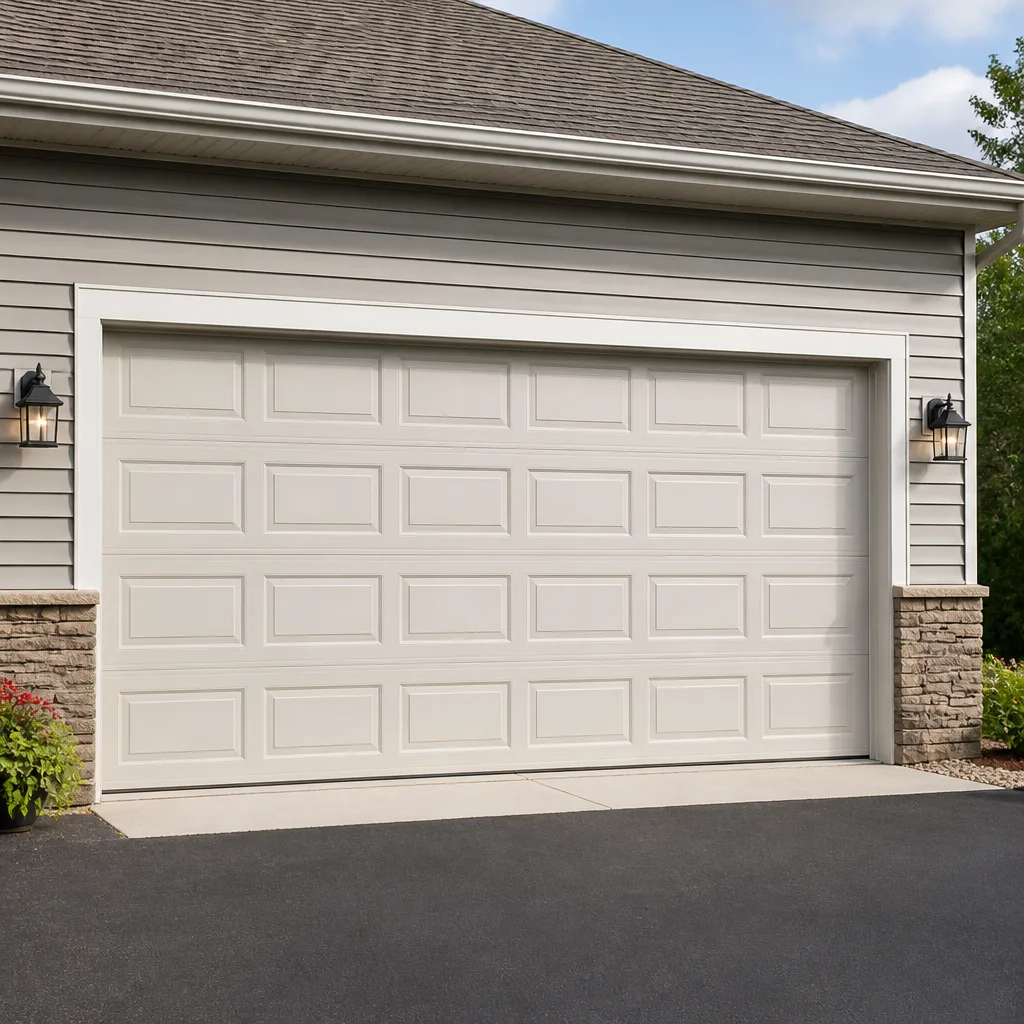 Raised-panel steel
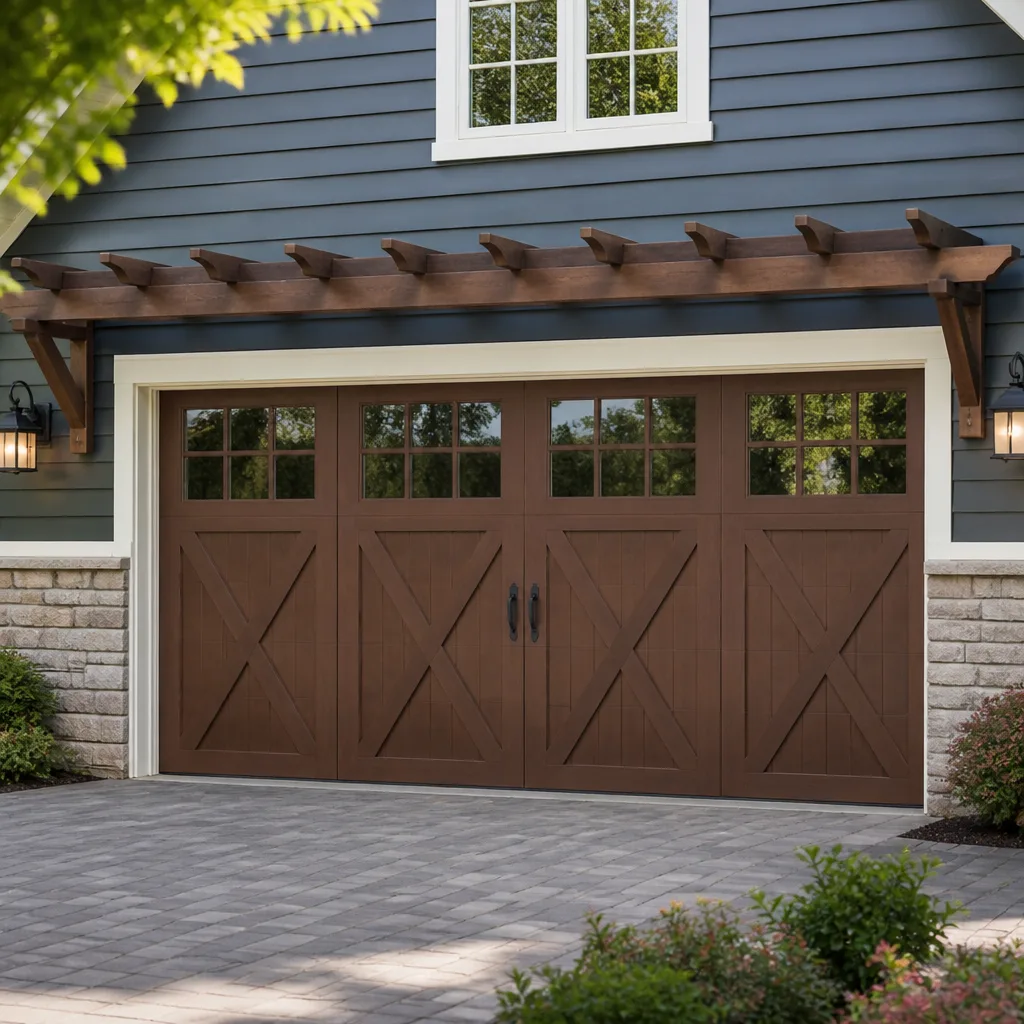 Carriage house
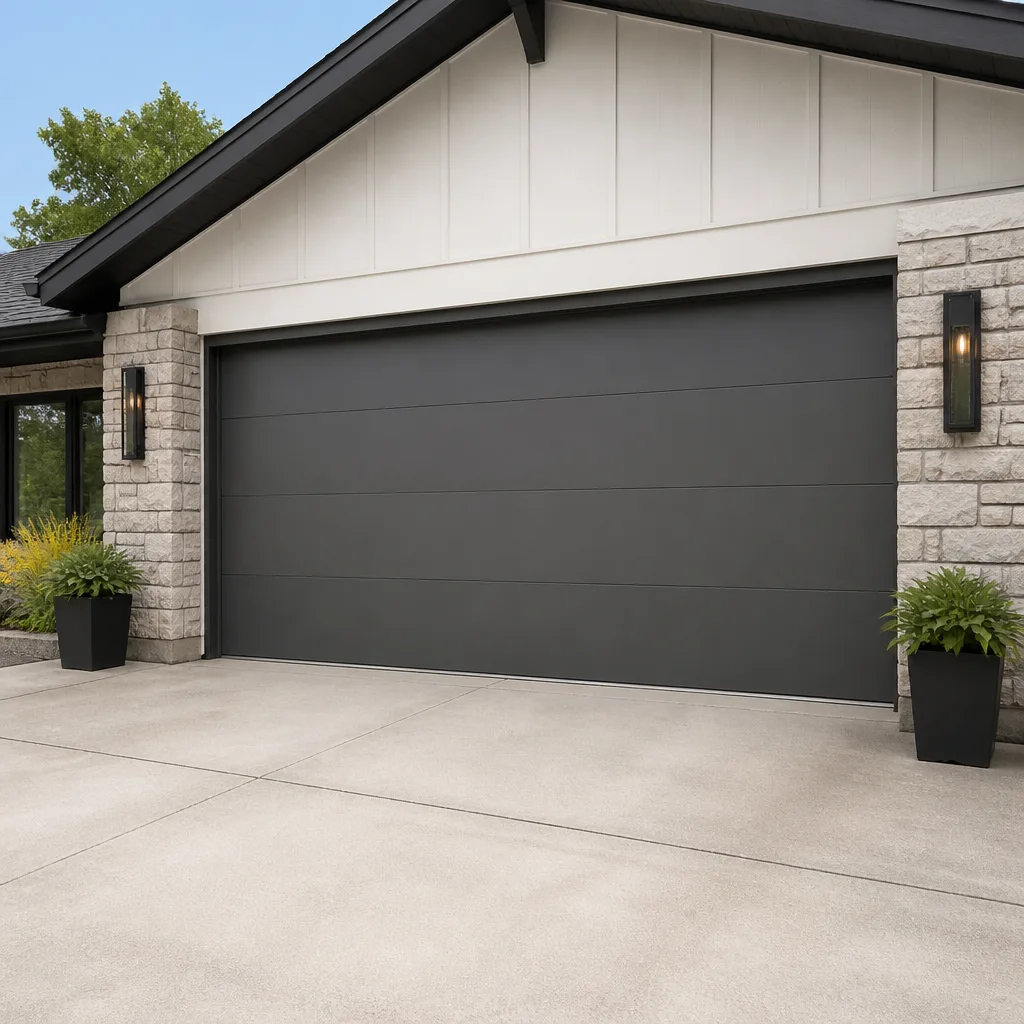 Modern flush
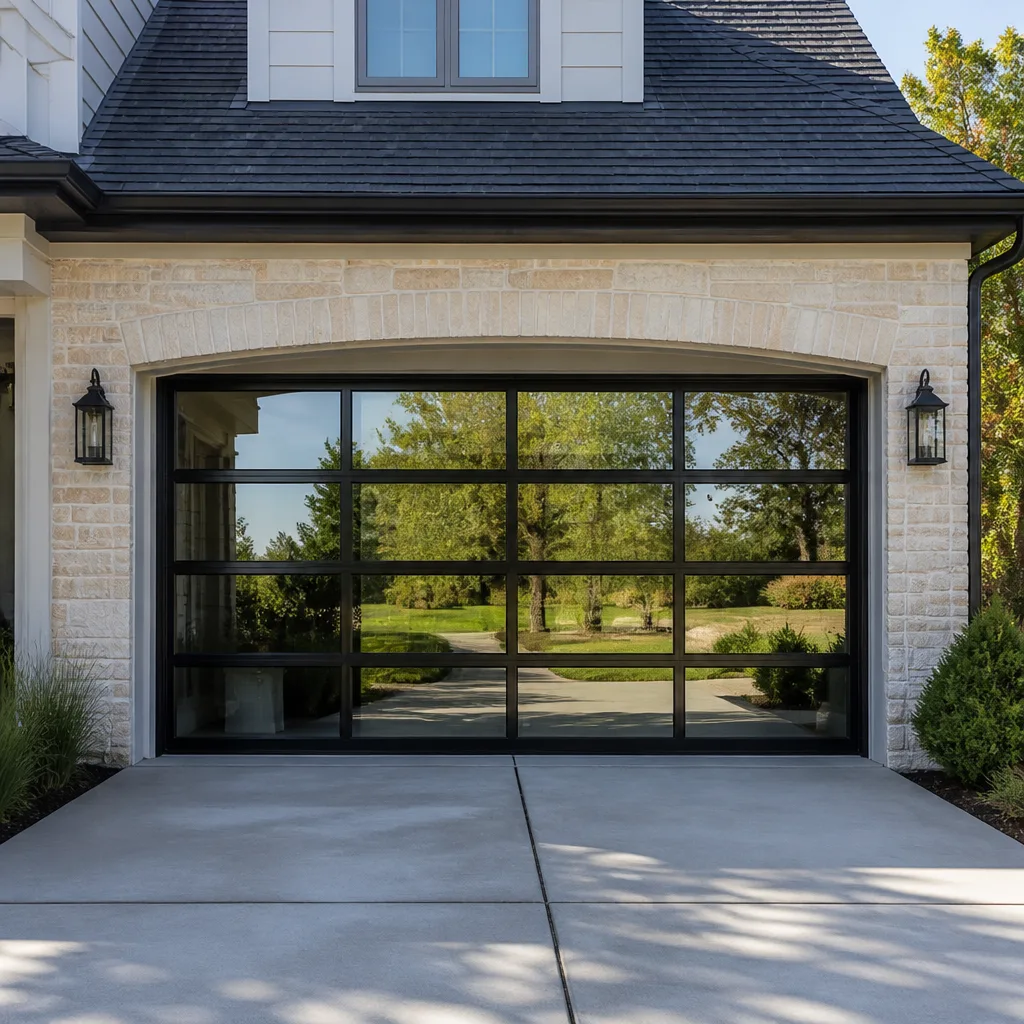 Full-view glass
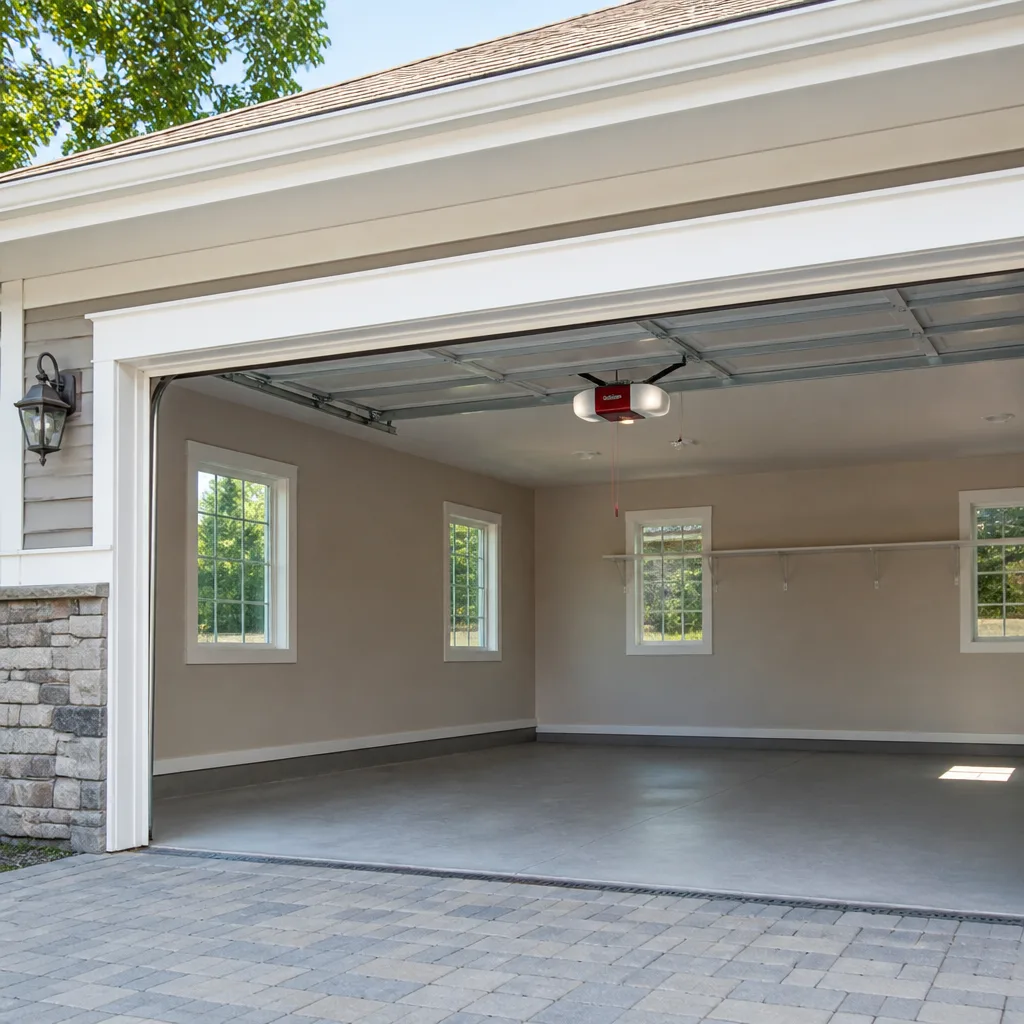 LiftMaster openers
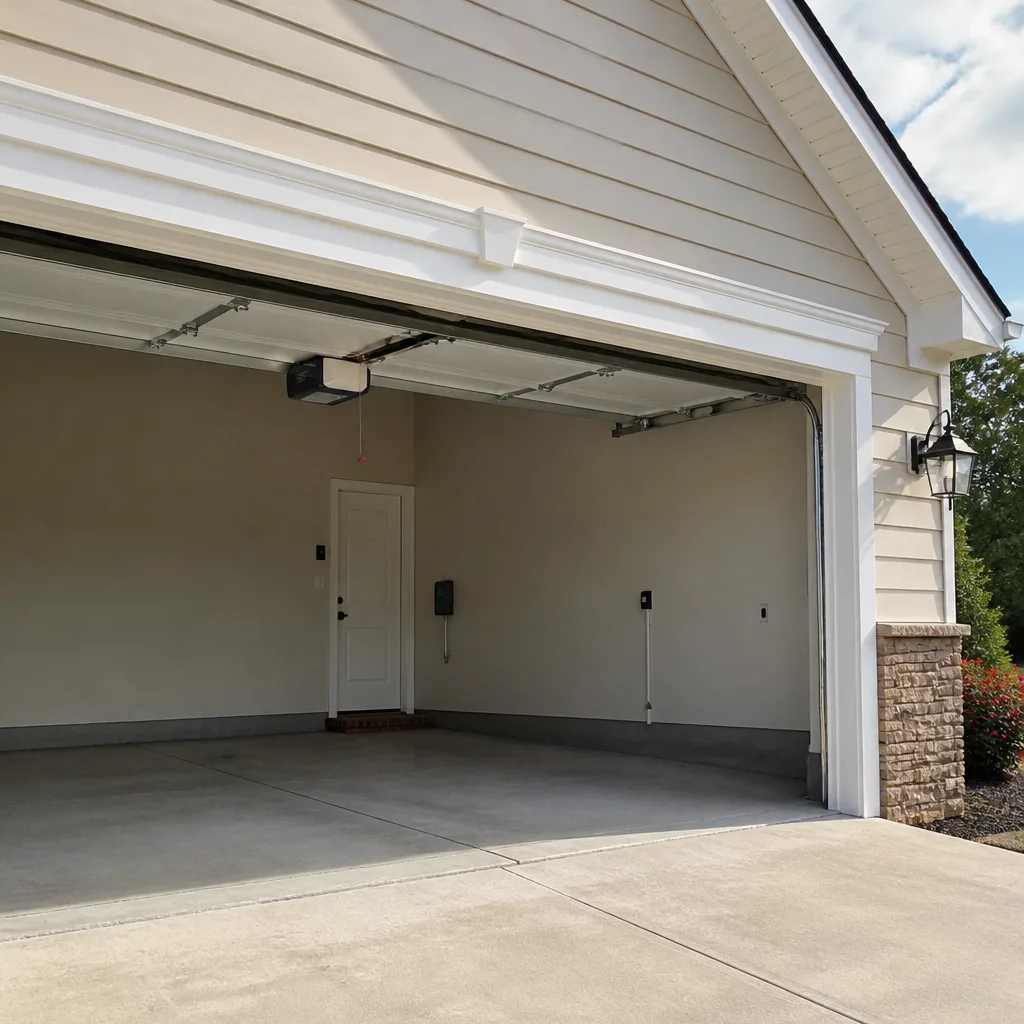 Chamberlain openers
Full 25-point door and opener safety check with every visit - springs, cables, rollers, tracks, and your LiftMaster or Chamberlain opener included
You get a price before we start. It does not change when the pro arrives.
Get your free estimateGarage Door Repair Troubleshooting in New Rochelle: Common Problems and How to Fix Them
The call we get most often isn’t “my door won’t open.” It’s “I already tried to fix it and now it’s worse.” A door that reverses halfway up gets forced with the wall button held down, or a binding track gets sprayed with lubricant and yanked, and a small adjustment turns into a cable and drum replacement. Misreading the symptom is the expensive part. Nearly every failure that shows up at a New Rochelle home falls into one of five mechanical categories: balance and spring tension, track and roller geometry, the opener and its logic board, the safety sensor circuit, and the door panel and hardware. This guide maps each symptom you’re likely to notice to the system behind it, tells you which checks are genuinely safe, and flags the ones that put your hands in the path of stored spring tension.
Quick Answer
Garage door troubleshooting in New Rochelle starts with one question: did the door itself fail, or did the opener fail? If you can lift the door by hand with the opener released, the problem is usually in the opener or its sensors. If the door won’t budge, binds, or hangs at an angle, the problem is mechanical and lives in the springs, cables, tracks, or rollers. Spring and cable problems are not homeowner repairs, because both store energy that can release suddenly. Everything else can usually be narrowed down safely from the floor with your eyes and ears.
Styles & brands we work with
- Raised-panel steel
- Carriage house
- Modern flush
- Full-view glass
- LiftMaster openers
- Chamberlain openers
Table of Contents
- The Five Failure Categories Every Door Falls Into
- The Symptom-to-Cause Diagnostic Tree
- Why “My Remote Stopped Working” Has Four Different Causes
- What Each Sound Tells You: Grinding, Popping, Scraping, Squealing
- Which Troubleshooting Steps Are Safe for a Homeowner
- How Westchester Winters Throw Off Alignment and Sensors
- Why Brand Familiarity Shortens Diagnosis Time
- When a Problem Counts as an Emergency
The Five Failure Categories Every Door Falls Into
Garage doors are simple machines with a small number of systems, and every symptom comes from one of them. Getting the category right before you call saves you from paying for the wrong repair and helps you describe the problem in a way that lets a technician arrive with the right parts. In our experience across New Rochelle, the category is clear the moment the door is put through a few movements by hand. Here’s how the five break down.
- Balance and spring tension: the door feels heavy, drops on its own, or won’t stay halfway open. Torsion springs above the door or extension springs along the sides carry the door’s full weight. When one lets go, the opener starts lifting a door it was never designed to carry. This is a safety issue, not just an inconvenience.
- Track and roller geometry: a wheel off the rail, a bent track section, or worn rollers. The door usually still moves but drags, tilts, or catches at a specific height.
- Opener and logic board: the motor runs but nothing moves, the door only travels partway, or the opener resets itself mid-cycle. Gears, the travel limit settings, and the control board all live here.
- Safety sensor circuit: the door goes down an inch or two and reverses. The reversal is the system working as designed; the fault is in the beam or its alignment.
- Panel and hardware: dents, cracked sections, loose hinges, broken rollers, or a snapped lifting cable. Visible from the floor most of the time.
Diagnosis is a process of elimination. A door that reverses immediately looks like a sensor problem and usually is one, but a binding track can also trip the reversal through resistance. A door that won’t open looks like a dead opener and is more often a broken spring. Rules like “reverses equals sensors” and “won’t open equals opener” fail often enough that you should confirm with your hands and ears rather than assume.
One quick test tells you which half of the system owns the problem. Pull the red release handle to disconnect the door from the opener, then lift the door by hand to about waist height. A healthy door rides easily and stays where you put it. A door that fights you, drops, or takes real effort points to the mechanical category. If it moves smoothly by hand, start looking at the opener and sensors. The rest of this guide follows each symptom from there.
The Symptom-to-Cause Diagnostic Tree
Most homeowners describe what they see rather than what’s broken, and those descriptions point in very different directions. The same “it doesn’t work” can mean four unrelated failures. This tree takes the symptom you’re actually experiencing and works back to the component most likely responsible. It won’t tell you how to fix a spring or a cable, but it will tell you whether you’re looking at an opener issue, a sensor issue, or a mechanical problem that needs a technician on-site.
- The door moves slowly or seems sluggish. Usually a tired opener, worn rollers, or a dry hinge-and-roller assembly on the door. On older doors, the opener motor is near the end of its service life and labors under a load it used to handle without effort.
- The door won’t move at all, and the opener hums or clicks. The motor is trying to work against something that won’t budge: a broken spring, a seized roller, or a door that’s come off its track. The opener’s gears may also be stripped, which is common with the plastic drive gears inside many opener models.
- The door moves partway and stops. The opener’s travel limit settings are off, or a broken spring is providing load the opener reads as an obstruction. It can also be a roller that binds at a particular rail joint.
- The door goes down an inch or two and reverses. The safety sensor beam is broken or misaligned, the sensor lens is dirty, or sunlight is hitting the receiving eye. A cable or spring failure can also trigger the reversal through resistance.
- The opener runs but the door stays put. Either the door has been released from the carriage (the red handle got pulled at some point and never reconnected), the carriage is disengaged, or the opener gear and rail are no longer connected.
- Loud noise or grinding. Worn rollers, a failing opener gear, a bent track, or a hinge with a snapped leaf. The exact sound narrows it down, which the sound section below covers in detail.
The habit that pays off is matching the symptom to the category before you touch a tool. If you’re dealing with a mechanical failure and you need it corrected quickly, our garage door repair service is what you want. If the door itself is fine and the opener is the problem, garage door opener repair is the right call. Getting that distinction right the first time is often the difference between a straightforward visit and a return trip for parts.
Why “My Remote Stopped Working” Has Four Different Causes
A dead remote is the most misdiagnosed garage door problem there is. The instinct is to buy a new remote, and sometimes that works. But four distinct failures produce the same symptom, and only one of them actually involves the remote itself. Before you spend money on a replacement, work through these in order.
- The remote itself: a dead battery, worn buttons, or a remote that needs reprogramming after the opener’s memory was cleared. The tell is that the wall button still works fine while only the remote is dead.
- The opener’s receiver or memory: the opener isn’t listening. New remotes won’t pair, the opener may have lost its stored codes, or the receiver board has a fault. If the wall button works and remotes don’t, confirm the receiver before assuming the remote is at fault.
- The safety sensors: this one fools people constantly. A blocked or misaligned sensor stops the door from closing even when the opener receives the signal. The remote is fine and the opener is fine, but nothing happens because the door won’t move with a broken beam.
- The power or battery backup: the opener has lost power, a breaker tripped, or a battery backup unit is in a fault state. The opener’s light behavior usually tells you which.
Working through these from the wall button inward is the fastest path. Test the wall button. If it works, the opener and sensors are likely fine and the problem is the remote or the receiver. If it doesn’t work, the opener’s power supply or the sensors own the issue. That one test saves most homeowners a wasted afternoon.
Pairing a new remote is generally safe and worth trying, but pay attention to what your opener accepts. Craftsman and Genie units from different production runs use different frequency and rolling-code formats, and a remote that looks right may not pair at all. When pairing stalls, that’s a signal to stop guessing at the receiver and let someone who works with these systems every day take a look. Give us a call and we can tell you how a garage door opener repair visit works for your specific opener model.
What Each Sound Tells You: Grinding, Popping, Scraping, Squealing
Your ears are one of the best diagnostic tools you have, and the exact sound almost always points to the component responsible. Garage doors make noise, but the sounds are not interchangeable. Here’s what each one most often implicates.
- Grinding: usually the opener’s internal gears, the plastic drive gear in particular, or dry metal-on-metal contact between the rail and the carriage. Grinding that gets worse over a few cycles is a part on its way out.
- Popping: worn or broken rollers in the track, a roller that jumps its rail, or a loose hinge plate that racks at a certain point in the travel. A single sharp pop followed by a door that won’t move is often a spring letting go.
- Scraping: a door rubbing against the frame from a track pushed out of alignment, or a roller set that’s too loose and lets the door lean into the jamb. Common after a winter of freeze-thaw shifts.
- Squealing: metal-on-metal friction, usually dry hinges, rollers, and the pivot points. Squealing is the cheapest sound to address and the easiest to catch before it wears components down.
Timing matters as much as the sound itself. Noise at the same point in every cycle points to a specific spot on the track or a specific roller. Noise that varies from cycle to cycle suggests a loose component that shifts. A new sound after a cold snap is usually a thermal contraction issue; a new sound after a hit to the door is damage. Note when it happens and where on the door it comes from, because that detail will shorten the diagnosis.
Lubrication knocks out squealing most of the time. But don’t spray lubricant on the springs, cables, or the photo-eye lenses, and never treat a popping sound as a lubricant problem. A broken spring shouldn’t be greased and worked around; it should be identified and replaced. If a pop precedes the door refusing to move, stop cycling it and get a technician to look. Our spring specialists see that scenario in New Rochelle constantly, and a call to garage door spring repair is the right move.
Which Troubleshooting Steps Are Safe for a Homeowner
Troubleshooting splits cleanly into two piles: things you can safely check from the floor with no tools beyond a rag and a screwdriver, and things that require training because the components store dangerous energy. Being honest about which pile you’re standing in protects your hands, fingers, and the door itself.
Safe to try at home:
- Look at the photo-eye sensors. Confirm both eyes are facing each other, wipe the lenses clean, and check that the small status light on the receiving sensor is steady rather than flickering or dark.
- Test the wall button versus the remote, as described in the remote section, to isolate the fault.
- Pull the red release handle and lift the door by hand to see whether it balances. Then re-engage the door only if it operates smoothly.
- Check for visible damage: bent track, dented panel, a roller out of its rail, or something in the door’s path.
- Lubricate the hinges, rollers, and pivot points with a door-specific lubricant. Never the springs or cables.
Not safe, and should be left to a technician:
- Adjusting, tensioning, or removing a spring, torsion or extension. Both store enormous energy, and the tools that manage them are specialized for a reason.
- Unwinding or re-installing a cable. The cable drums and springs are in a balance relationship, and releasing one side without the other can send hardware flying.
- Re-seating a door that has come off its track. The door can be holding spring tension in an unstable position.
- Opening the opener to reach the gears or logic board with the power on.
The pattern to remember: anything that looks like it’s under tension is off-limits. Springs and cables are the two to avoid completely. When in doubt, close the door to the floor and keep it there. If you’re not certain which category your problem is in, or you’ve already tried the safe steps and the door still misbehaves, our specialists in New Rochelle can take it from there. We work on LiftMaster, Chamberlain, Genie, Clopay, Amarr, Wayne Dalton, Craftsman, and Raynor systems, so we know the parts and the failure patterns for the hardware you have.
How Westchester Winters Throw Off Alignment and Sensors
A lot of “electrical” garage door problems in New Rochelle turn out to be thermal, not electrical. Westchester County winters bring real temperature swings, and garage doors sit right at the boundary between a heated house and a cold outdoor environment. The door, the track, the frame, and the concrete floor all expand and contract at different rates. Steel moves one way, wood frames another, and the sensors are mounted to the door frame where both effects land.
Here’s how that shows up as a symptom:
- Sensor misalignment. The photo-eye brackets shift fractionally with the door frame and the beam misses its target. The door reverses a few inches off the floor. Looks like a circuitry failure; usually a 1/8-inch alignment issue.
- Binding track. A track section bolted to the framing pushes inward in cold weather and the door catches at a rail joint. In warmer months the same door cycles fine.
- False obstruction readings. Frozen hinges or stiff rollers raise the resistance the opener reads as an obstruction, so the door reverses or stalls even with good springs.
- Door that drops when closed. A spring balanced for warm weather can’t hold the same load in the cold, so a door that sits fine in May drops when released in January.
The pattern to look for is a problem that appeared with the first cold stretch and gets worse on the coldest mornings. That’s the signature of a thermal alignment issue, not a dead control board. Before the cold season, give the door a slow hand-cycle and look for catching points and clean the sensor lenses. Some of these issues are safe to correct with a sensor adjustment; others, particularly a track that’s shifted, are worth a technician visit so the door is re-aligned rather than forced. Our technicians have up to 13 years of experience with these seasonal patterns across New Rochelle.
Why Brand Familiarity Shortens Diagnosis Time
The same symptom means different things depending on the system you own. A Genie opener that resets mid-cycle and a LiftMaster that resets mid-cycle don’t share a common control board, and the reason for the reset can differ. That’s why brand familiarity is practical, not a marketing point. When a technician already knows how your unit behaves, diagnosis is shorter and the right part is on the first visit instead of the second.
We work on Amarr, Wayne Dalton, Craftsman, and Raynor systems among the major brands installed in New Rochelle homes, along with LiftMaster, Chamberlain, Genie, and Clopay. That range matters in a city with as much variety in housing stock as New Rochelle has, from older homes with legacy doors to recently built and renovated properties with newer opener models. A single-brand dealer sees one design and one parts catalog. A generalist sees every brand occasionally and none often. A garage door specialist works across the whole set and has seen the specific failure patterns for each.
You’ll notice the difference most often on three things:
- Opener logic and travel limits. Different brands program differently. A technician who knows the model sets limits correctly the first time.
- Spring and hardware compatibility. Door weight, spring type, and drum configuration differ by manufacturer. Sourcing the right spring for your specific door is faster when the brand is familiar.
- Parts availability. Knowing which brands are still current and which have moved to newer models saves a return trip.
This is also why a full assessment matters when the door needs more than a repair. If a component is at the end of its life, or the door is older than the parts support, knowing the whole system makes the conversation about repair versus replacement a real conversation rather than a sales pitch. We’re a garage door specialist covering repair, opener service, spring replacement, and complete new installation, so a single call answers the full question.
When a Problem Counts as an Emergency
Not every garage door problem is worth a late-night call, but some are genuinely urgent, and recognizing the difference matters. The two scenarios that justify emergency service are a door stuck open overnight and a door that’s stuck closed and unsafe to operate. Everything else can usually be scheduled.
- Door stuck open overnight: the house is open. This is where emergency garage door service earns its keep, since waiting until normal hours means a whole night of exposure.
- Door stuck closed with a car inside: not a safety risk in the same way, but it disrupts the household and is worth an emergency booking if you need to get out.
- Door off the track and hanging: the door may be supported by an unstable component under tension. Keep everyone clear and call for service.
- Snapped spring or cable: stop operating the door, keep it closed, and book a technician. A spring failure on one side leaves the other carrying a load it can’t carry safely, and continued cycling can damage the door.
- Sparks, burning smell, or an opener that trips a breaker: shut off the opener’s power at the panel and call for a technician. This is the one opener symptom that shouldn’t wait.
Normal business hours work fine for a slow-moving door, a noisy roller, a grinding opener, or a sensor that needs re-aiming. Emergency service is available for the situations where waiting until business hours isn’t an option. Being honest about which category your problem falls into gets you faster help without treating every issue as an emergency.
Common Mistakes to Avoid
- Forcing a door that won’t open. If the door won’t move, something is physically wrong. Holding the wall button to overcome the resistance strains the opener and risks a broken spring letting go.
- Greasing a broken spring. A greasy spring doesn’t fix a snapped one and makes the part harder to inspect. Lubrication is for hinges and rollers, not springs.
- Buying a new remote before checking the sensors. A blocked or misaligned sensor produces the same “nothing happens” symptom as a dead remote, and replacing the remote fixes nothing.
- Re-seating a door that’s come off the track by hand. A door off its track is holding stored energy from the springs. Working it back on by hand is how people get hurt.
- Ignoring the early sounds. Grinding and squealing are notification, not background noise. Addressing them at the first sign keeps the repair small.
- Applying a fancier opener over a mechanical problem. If the door won’t balance by hand, a new opener won’t help. Fix the balance first, then the opener.
- Treating winter misalignment as an electrical failure. A door that reverses only on cold mornings is usually a sensor or track alignment issue. Aligning the sensor is cheap; replacing the control board is not.
See the difference
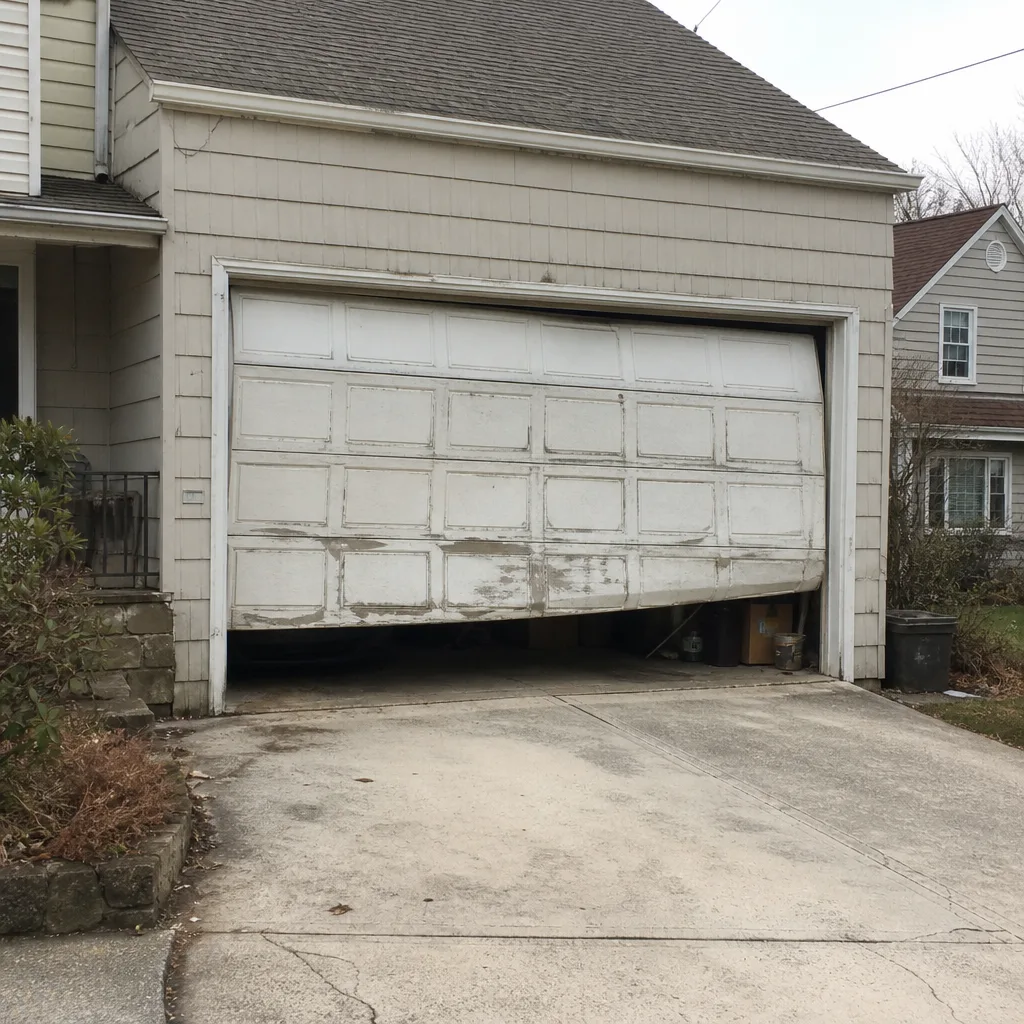 Before
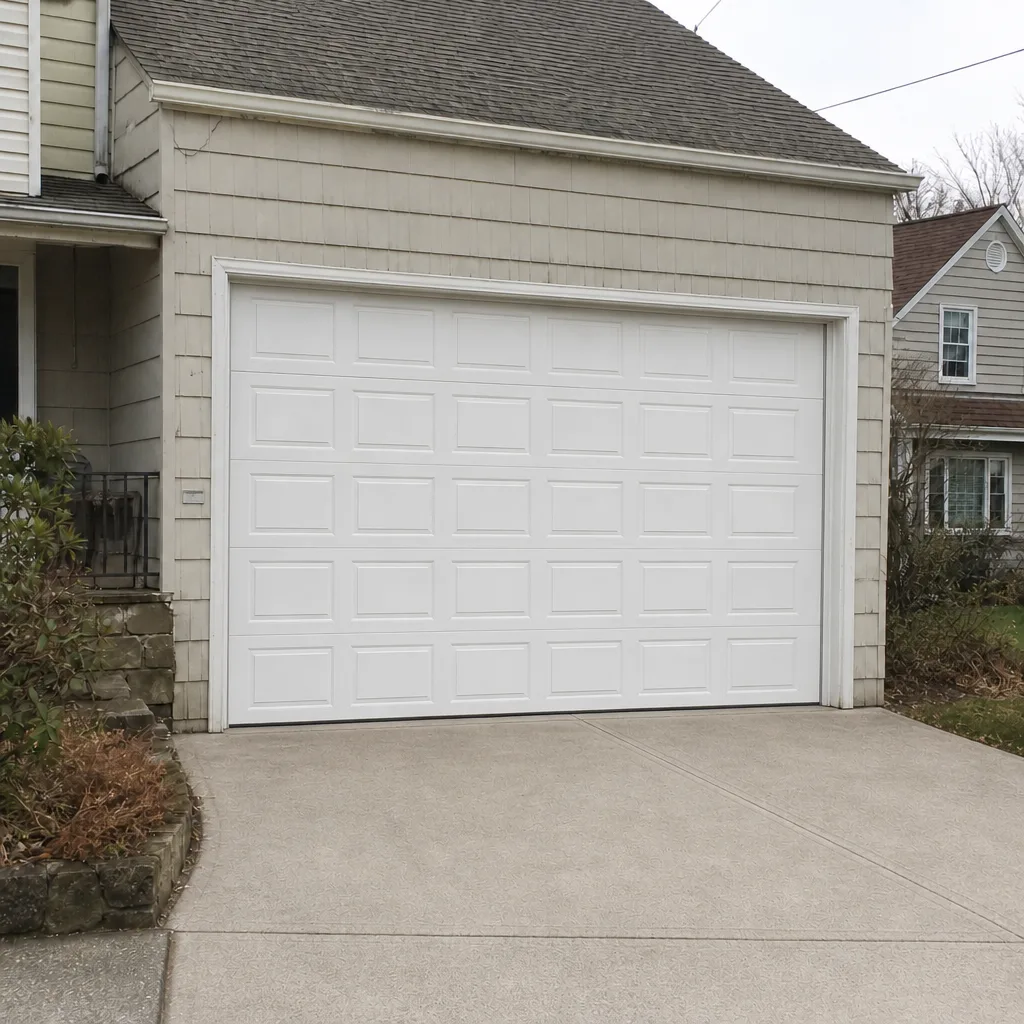 After
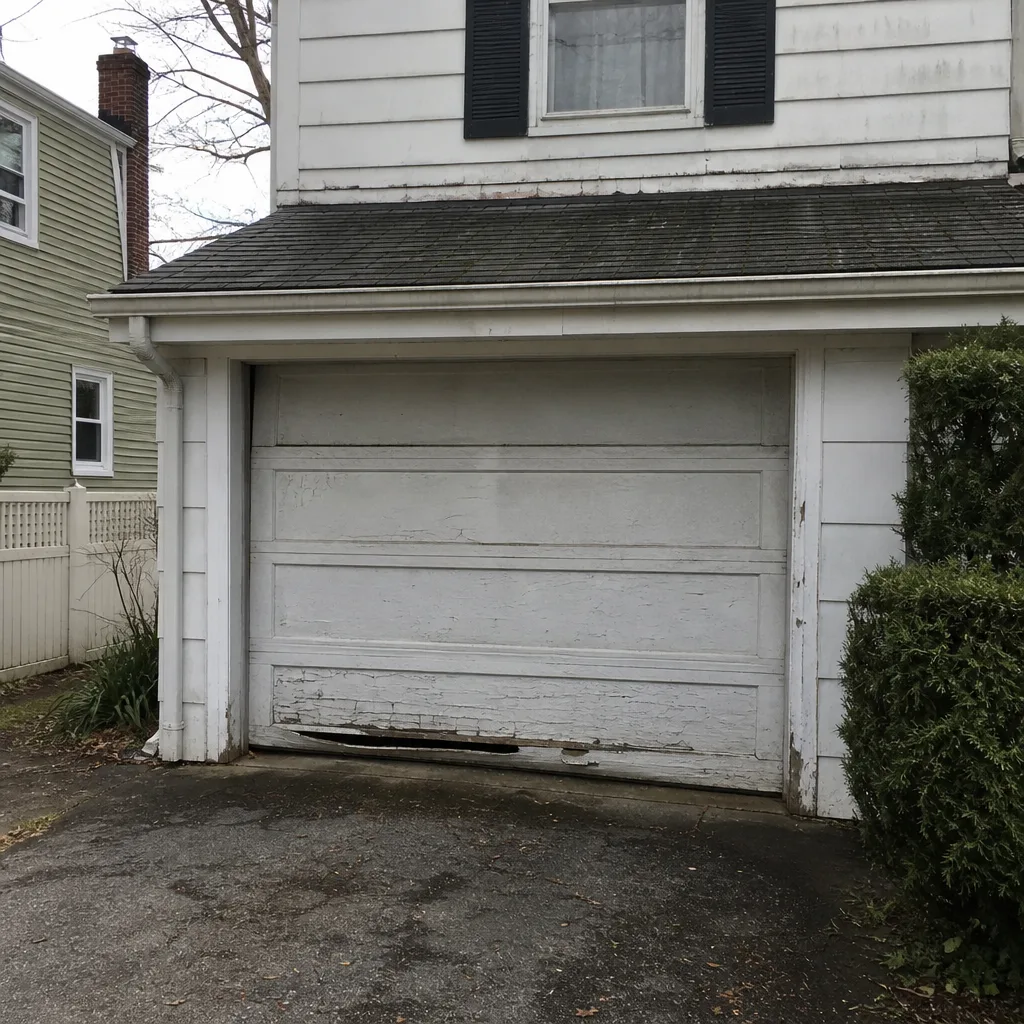 Before
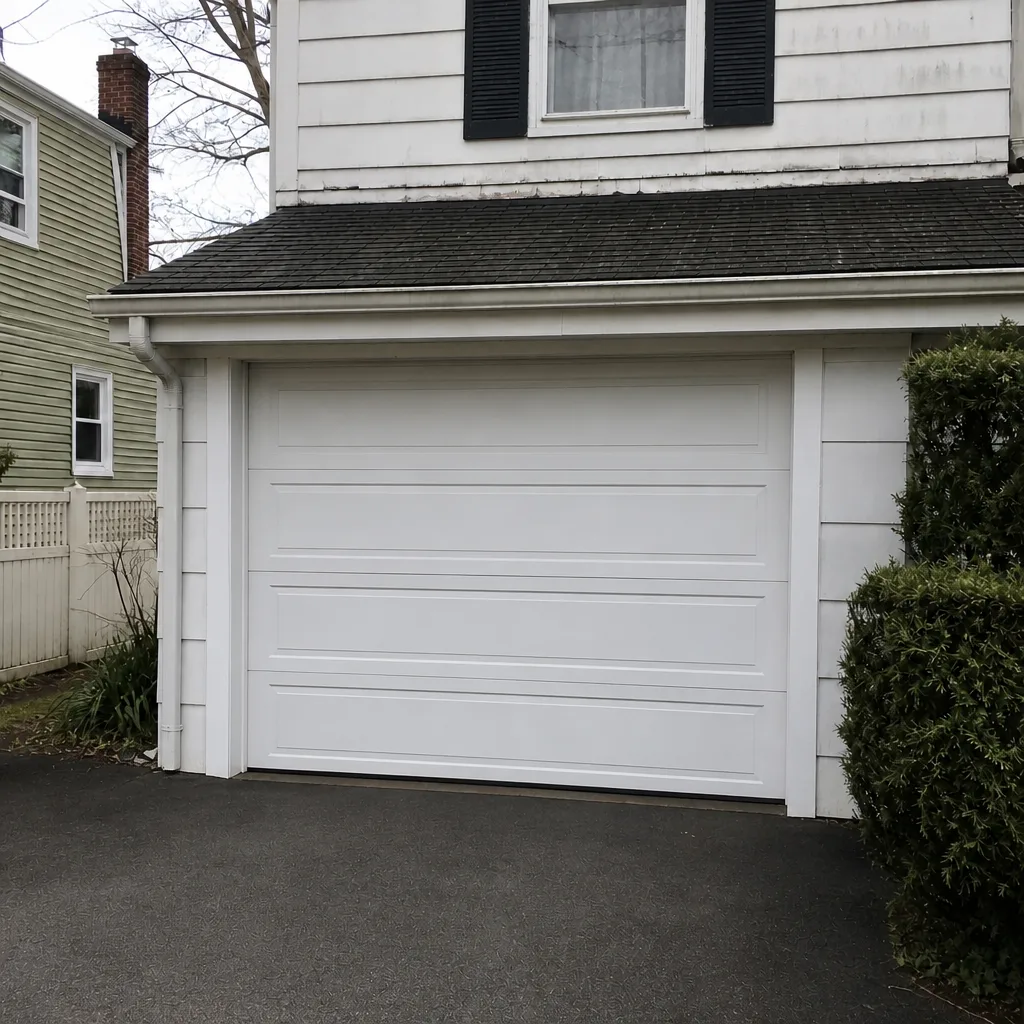 After
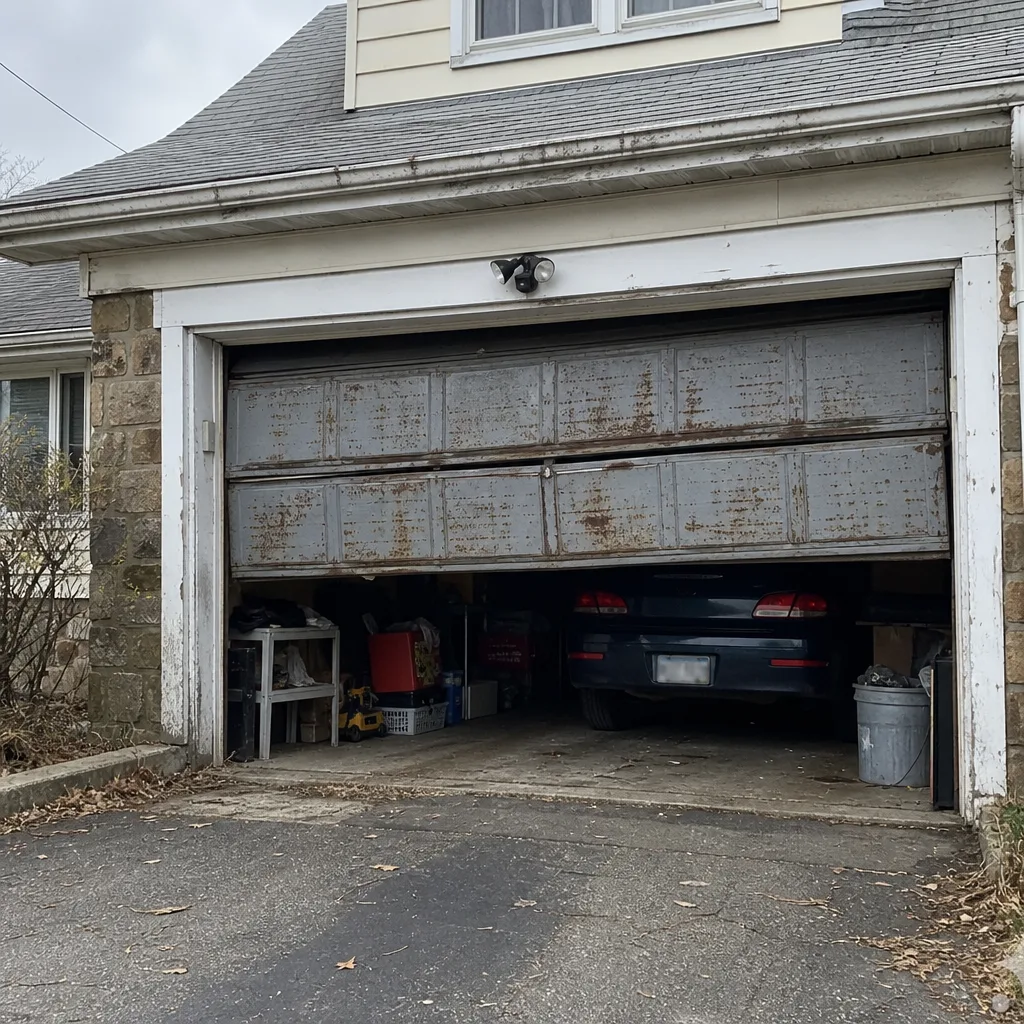 Before
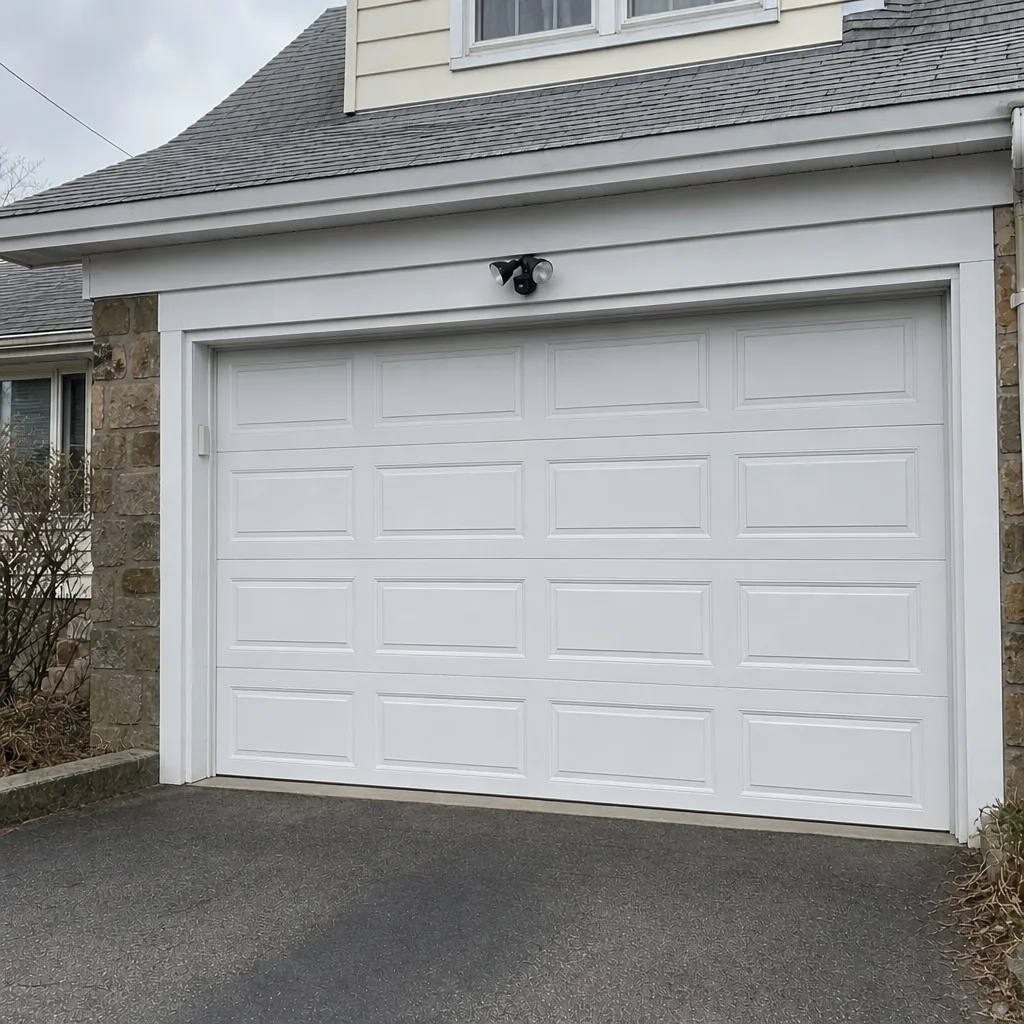 After
When to Call a Professional
Call a professional when anything in the diagnosis points at the springs, cables, or opener internals, when the door has come off its track, or when you’ve worked through the safe checks and the door still misbehaves. Also call when the door has never been serviced and cycles poorly, when the opener is older than its service life, or when a symptom keeps coming back after a fix. The five categories in this guide narrow the problem down, but they don’t replace an on-site look at the hardware under load. New Rochelle Garage Door Repair Pros offers free estimates in New Rochelle – call (877) 417-8369. The local pro is licensed and insured as their state requires, and we’ll measure, diagnose, and quote before any work starts. You’ll know the price before a tool comes out.
Frequently Asked Questions
Typical garage door repair in New Rochelle runs roughly $150 to $350 for common fixes like roller, hinge, cable, or sensor work, with spring repair priced separately per spring. A complex opener or track repair can run higher. The written estimate you receive after a technician sees the door sets the final price, so the number you agree to is the number you pay. Call (877) 417-8369 for an exact quote – estimates are free.
For emergency situations like a door stuck open overnight or one that won’t move at all, we can often get a technician out the same day. Non-emergency repairs are scheduled around your availability, and new door installations are measured and scheduled separately. Call (877) 417-8369 and describe what the door is doing – that helps us slot you in correctly.
No. We quote before any work starts. If the on-site inspection reveals something the estimate didn’t cover, we tell you and get your agreement before adding anything. You’re never invoiced more than the written estimate without your approval. Call (877) 417-8369 to book an assessment.
Yes – the local pro we connect you with is licensed and insured as their state requires. We work on systems from LiftMaster, Chamberlain, Genie, Clopay, Amarr, Wayne Dalton, Craftsman, and Raynor, so your technician will recognize your specific door and opener. Call (877) 417-8369 to schedule a visit.
No. Spring replacement carries serious injury risk and should always be done by a trained technician. Torsion and extension springs store enough energy to cause severe injury if they release unexpectedly. We handle spring repair as a core service – call (877) 417-8369 if you suspect a spring problem.
Winter in Westchester County brings temperature swings that shift the door frame and track slightly, which can throw off sensor alignment or cause binding at a rail joint. A door that reverses only on cold mornings is usually an alignment issue rather than an electrical failure. A technician can correct it with a sensor or track adjustment. Call (877) 417-8369 if the pattern repeats.
The Bottom Line
Troubleshooting a garage door comes down to identifying the category before reaching for a tool. Slow movement, no movement, partial movement, opening without lifting, and unexpected sounds each point to a different system, and the same symptom means different things depending on the brand and the door. Anything that looks like it’s holding tension – springs or cables – belongs to a technician. The safe checks are yours to try, and they’ll often narrow the problem down to something specific. When the diagnosis points to a repair or you’re not sure, call New Rochelle Garage Door Repair Pros at (877) 417-8369 for a free estimate. Our specialists cover repair, opener service, spring replacement, and new installation, on the major brands you’re likely to own.
Written by the team at New Rochelle Garage Door Repair Pros.